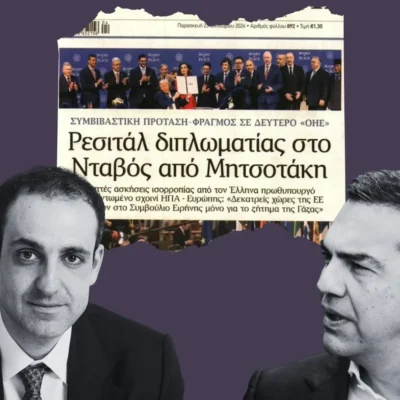
Debates allow citizens to see political leaders go head-to-head in a circumscribed arena. In the last debate for the 2023 Greek election, we had a showdown that was judged as uninteresting and lacking the pressure conditions of a normal debate. Thus, with the debates of the upcoming American elections just around the corner, the question arises as to whether these have a place in the political arena and, if so, what are their advantages to the comprehensive and informed decision of the voter.
On the one hand, debates have the power to offer an alternative form of party confrontation. This alternative is based on the fact that we are not dealing with one-sided partisan advertisements, filled with ready-made statements written by spin doctors nor "fixed" interviews with journalists or news stations that are leaning toward a party or ideology. Instead, these televised fights show how political leaders can defend their respective political programs when they are judged in real time by their opponents. What is more, debates are an opportunity for a battle on equal footing. This is because parties with a smaller financial budget can seize the opportunity and convince people of their program without having the advertising power of the larger parties. This way, popularity barriers are removed and the political landscape can be shaken up.
On the other hand, debates are deservedly not getting much exposure in the political arena. A key argument against them is the identification of the winner of such a matchup. Usually, the winner is not the political leader with the best program, but the best orator. For this reason, we should not always take the winner of the debate at face value, because we are not looking for orators who show how quippy they are, but leaders who will guide us into the future. At the moment, appeals to emotion and clever catchphrases often win, which distracts from the real messages of political leaders. Finally, had all the above not be enough, according to the Harvard Business Review, debates have no effect on the voting public except for a small percentage of voters.
Therefore, it seems that the power of debates is disputable, with there being valid concerns about whether they are useful. While it's hard to take the sentiment out of them, and there's no way (or reason) to increase their persuasiveness to viewers. But we can improve them with one simple change: the introduction of fact-checkers in the debate process. This way, these contests will be more logic-based and factual, giving citizens a more honest look at the leaders and the parties they represent. An additional benefit of this change is that debates may become less appealing to some political leaders, and this may give us another perspective on whether they oppose debates or the truth outright.
Ultimately, debates can be improved, but they still won't give the full picture of the candidates. They must therefore be treated as tools that contribute to a more informed voting decision. Even with the introduction of fact-checkers, debates will not become dominant, since the parties will never agree to take such big communication risks. Thus, as long as debates are ruled and decided on not by the populus but by partisan decisions, they will become rarer and more sterile. If, of course, the people demand that debates take place, then they can be done the right way.
Sources:
https://hbswk.hbs.edu/item/do-tv-debates-sway-voters